How to Spot Fake Lululemon: Real vs Fake in 2026
Verified 2026-07-21.
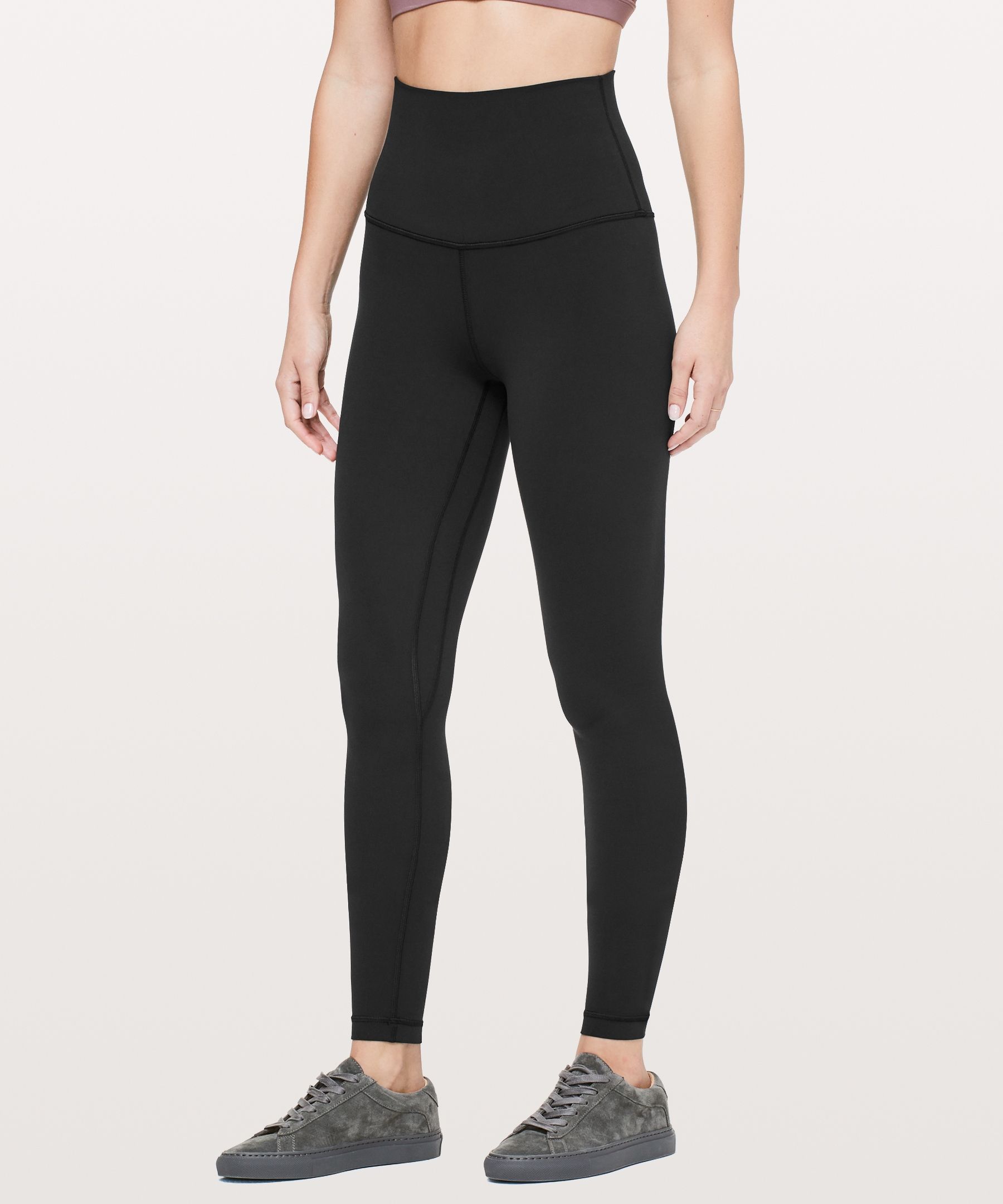
Fake Lululemon has gotten good, but it still fails on the details that are expensive to copy. You do not need a lab, you need to check five things in order: the size dot, the logo weight, the tag feel, the stitching, and the style code. No single marker is proof on its own, but a piece that fails two or three is almost certainly counterfeit. Here is what each tell looks like, real versus fake.
Key takeaways
- The size dot is the fastest tell: authentic numbers have rounded edges, even stroke width, consistent spacing, and a clear ring, and are never covered by plastic film.
- The real logo is chunkier with more negative space; fakes tend to look slimmer and oblong.
- Authentic rip tags feel smooth and durable, not flimsy, rough, or overly glossy, and carry no spelling or grammar errors.
- Real stitching is reinforced and layered; fake stitching is sparse enough to see the fabric through it.
- Styles from 2017 onward carry codes around the size dot for year and style; missing codes on a newer piece are a warning sign.
Start with the size dot
The size dot is the small printed circle inside the waistband or garment that shows the size, and it is the single most reliable tell.
On an authentic piece, the number has rounded edges and consistent stroke width, set in a clean sans-serif with uniform thickness. The spacing between digits is even, and there is a clear ring around the dot. The gray of the font is a lighter gray than the harsh, dark ink fakes often use.
Two instant fails: if the size dot is covered by a layer of plastic film, it is fake, and if the digits show irregular spacing or a slightly off font, treat it as counterfeit until the other markers clear it. Because the dot is cheap to print and hard to match exactly, it is where most fakes give themselves away first.
The logo: chunky versus slim
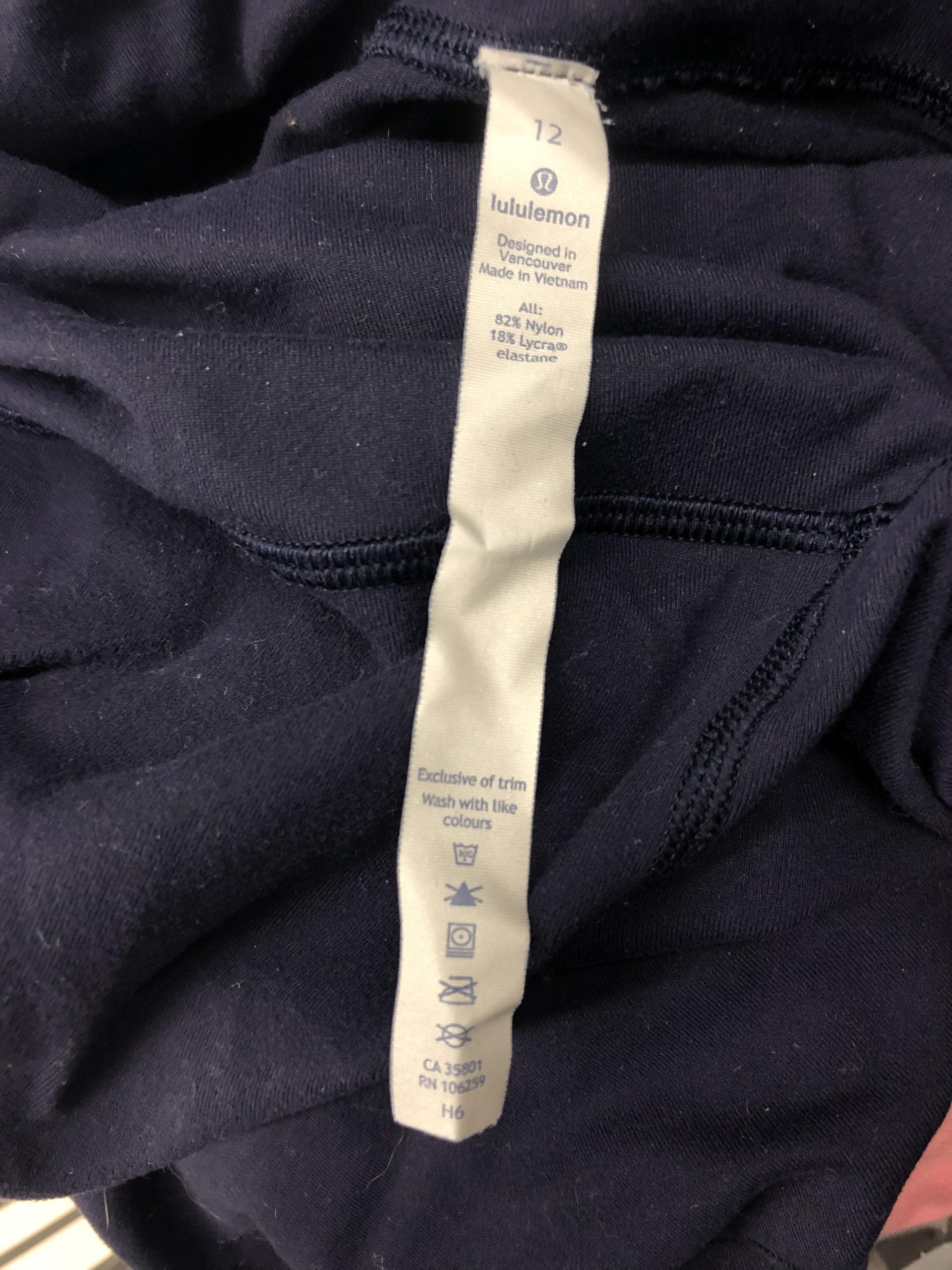
Lululemon’s logo has a specific weight that counterfeiters routinely miss. The authentic logo is chunkier, with more negative space inside and around the mark. Fake logos tend to look slimmer and oblong, as if the shape has been stretched or thinned.
Compare the piece against a known-authentic image at the same size. Look at the proportion of the mark and the space it encloses rather than just the overall shape, because a fake often gets the silhouette roughly right but the weight and spacing wrong. A logo that reads as thin or squished is a strong signal, especially when it lines up with a suspect size dot.

Tag feel, spelling, and the style code
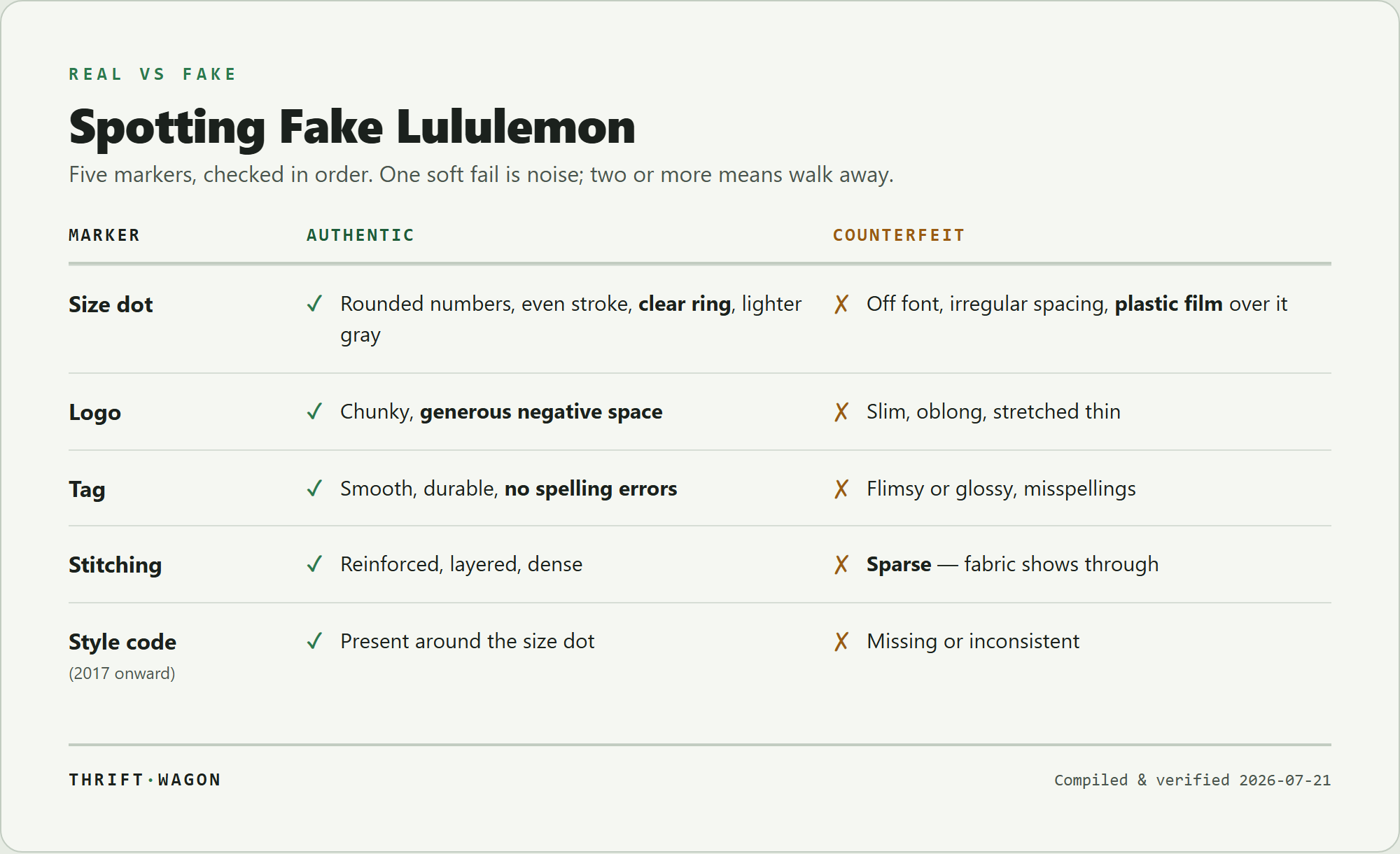
The tags carry several tells at once. Authentic Lululemon uses a high-quality rip-tag material that feels smooth and durable. A flimsy, rough, or overly glossy tag is a warning. Read the text closely: counterfeit tags often contain misspellings, grammatical errors, or incomplete information, which authentic production does not.
Since 2017, styles carry codes around the size dot that identify the year and style. On a newer piece, a missing code where one should be is a red flag. Use the code as a cross-check rather than proof on its own: it should agree with the garment’s apparent age and model.
Stitching and seams
Construction is expensive to fake well, so it is a good confirmer. Authentic Lululemon stitching is reinforced and layered, sitting dense and even along the seams. Fake stitching is sparse, often loose enough that you can see the underlying fabric through it.
Turn the garment inside out and run the seams under good light. Even, tight, reinforced stitching supports authenticity; gappy, thin, or uneven stitching that exposes fabric is a meaningful strike against it. Combined with a failed size dot or logo, poor stitching is usually enough to walk away.
Fabric, hand-feel, and price sanity
Authentic Lululemon fabric has a particular hand-feel: substantial, smooth, and consistent. A piece that feels thin, plasticky, or noticeably different from a known-good garment of the same line deserves suspicion, though hand-feel is subjective and should support the harder markers above rather than stand alone.
Apply a price sanity check too. A brand-new, sought-after style offered far below its normal resale range, especially in bulk or from an unfamiliar seller, is exactly the profile of counterfeit inventory. Cheap alone does not mean fake, but a suspicious price plus one failed physical marker is a clear signal.
Putting it together: a final checklist
Authenticate in order, and let the markers vote:
- Size dot: rounded, even numbers, clear ring, lighter gray, no plastic film
- Logo: chunky with generous negative space, not slim or oblong
- Tag: smooth durable material, no misspellings, correct info
- Style code: present on 2017+ pieces, and consistent with the garment
- Stitching: reinforced and layered, not sparse or see-through
One soft fail can be noise. Two or more failed markers, or any instant fail like plastic film over the size dot, means treat the piece as counterfeit. When money is on the line and you are still unsure, a paid authentication service is cheaper than a chargeback.
Frequently asked questions
What is the fastest way to spot fake Lululemon?
Check the size dot first. Authentic numbers have rounded edges, even stroke width, consistent spacing, and a clear ring, in a lighter gray. If the dot is covered by plastic film, or the font and spacing look off, treat the piece as fake until the logo, tag, and stitching clear it.
How can you tell a real Lululemon logo from a fake?
The authentic logo is chunkier with more negative space inside and around the mark. Fakes usually look slimmer and oblong, as if stretched or thinned. Compare against a known-authentic image at the same size and judge the weight and enclosed space, not just the outline.
Do all real Lululemon pieces have a style code?
Styles from 2017 onward carry codes around the size dot that identify the year and style. On a newer piece a missing code is a warning sign, but treat it as a cross-check rather than proof, since it should agree with the garment’s apparent age and model.
Is cheap Lululemon always fake?
No, but a suspicious price is a strong hint. A new, in-demand style priced far below its usual resale range, sold in bulk or by an unfamiliar seller, matches the profile of counterfeit stock. Combine the price signal with the physical markers rather than deciding on price alone.
How we checked this
Cross-referenced Lululemon authentication markers (size dot, logo, tag, stitching, style code) across multiple real-vs-fake guides and consolidated the reliable tells Five physical authentication markers plus the 2017+ style-code system. Collected 2026-07-21.
What this guide does not cover
This guide covers visual and tactile authentication markers, which counterfeiters improve over time, so no single tell is definitive and this is not a substitute for a professional authentication service on high-value pieces. Markers can also vary across product lines and years. When a lot of money is involved and you remain unsure, pay for authentication.
Sources
- Lululemon size dot font, stroke width, and spacing comparison for distinguishing authentic dots from counterfeits — Library Innovation
- Real vs fake Lululemon markers including the size dot ring, plastic-film fail, logo negative space, stitching, and 2017+ style codes around the dot — Lululemon Locator
