Is Mercari Legit? The Complete 2026 Safety Guide
Verified 2026-07-27
Yes, Mercari is legit. It is an established resale marketplace run by Mercari, Inc., a company publicly traded on the Tokyo Stock Exchange, with millions of buyers and sellers and buyer protection on every in-app order. Like any peer-to-peer platform it still has scammers, but the risks are specific and mostly avoidable. This guide explains how Mercari works, exactly what its protection covers, every common scam and how to spot it, what its 2026 fees actually are, and the single habit that keeps both buyers and sellers safe.

Key takeaways
- Mercari itself is legitimate and covered by Mercari Protection, but individual sellers vary, so the risk is the seller, not the platform.
- Buyer protection only applies when payment and messaging stay inside the app; the moment anyone moves you off-platform, all protection disappears.
- As a buyer you have three days after delivery to inspect and rate; never rate until you have checked the item, because rating releases the money to the seller.
- In 2026 Mercari charges the seller a flat 10% selling fee and charges the buyer a 3.6% protection fee; there is no separate payment processing fee.
- Most Mercari scams reuse the same handful of tricks, and knowing them makes almost all of them easy to sidestep.
Is Mercari legit? The short answer
Mercari is a legitimate, well-funded marketplace, not a scam site. It launched in Japan in 2013 and in the United States in 2014, and its parent company, Mercari, Inc., is publicly listed on the Tokyo Stock Exchange. Tens of millions of people have used the app to buy and sell secondhand clothing, electronics, collectibles, and household goods.
That corporate legitimacy is not the same as saying every transaction is safe. Mercari is a marketplace, so the person you are actually buying from is another user, and their honesty is what varies. What Mercari provides is the infrastructure that protects you from that variation: escrow-style payments, a buyer protection program, tracked shipping, and a ratings system.
So the honest answer is that Mercari is legit, and buying on it is safe as long as you keep the transaction on the platform and follow a few habits. The rest of this guide is those habits.
What Mercari is and how it works
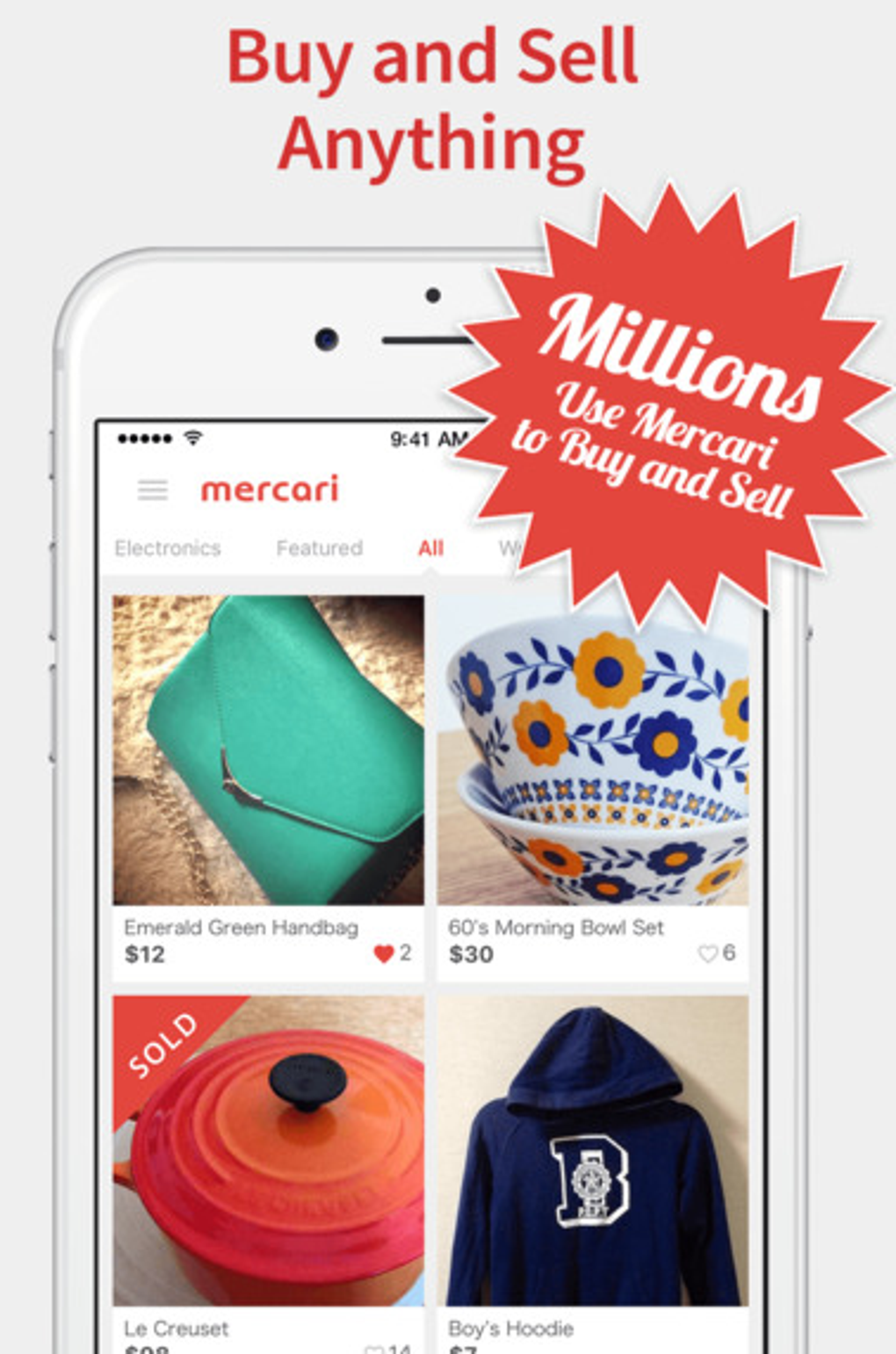
Mercari is a mobile-first resale marketplace where individuals list items for a fixed price (there are no auctions). A buyer taps Buy Now, pays in the app, and the seller ships the item, usually with a prepaid Mercari shipping label that carries tracking.
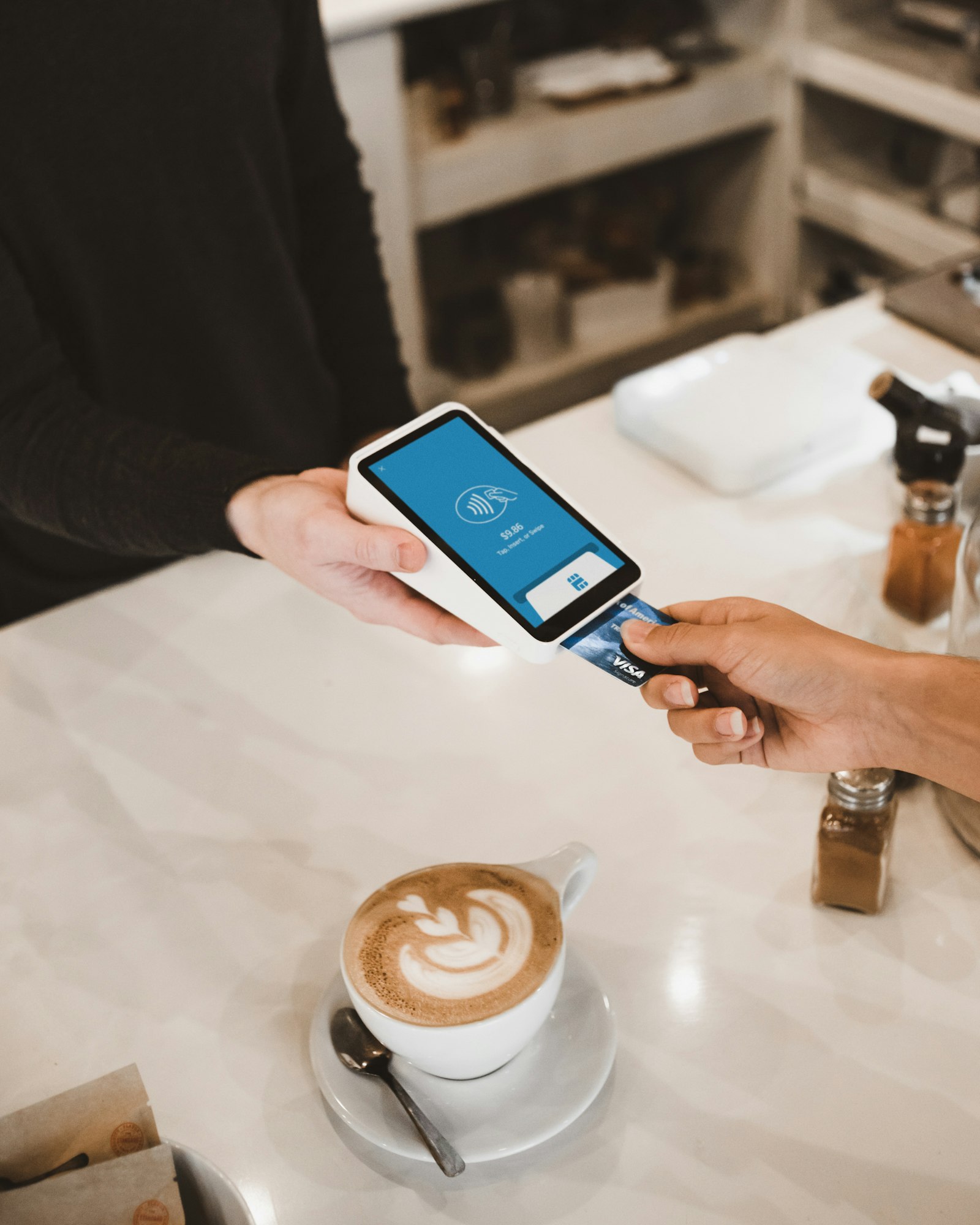
The part that makes it safe is what happens to the money. When you pay, Mercari holds your payment rather than handing it straight to the seller. The seller only gets paid after the item is delivered and you either rate the order or the rating window closes. That hold is the mechanism behind buyer protection: if the item never arrives or is wrong, the money has not left Mercari yet.
After delivery you have a three-day window to inspect the item and either rate the seller or open a return request. Once you rate, the sale is confirmed and the funds are released. This is why the timing of your rating matters so much, and why it is the subject of its own section below.
Mercari’s buyer protection: exactly what is covered
Every eligible in-app purchase is backed by Mercari Protection, funded by the buyer protection fee. It exists to make sure you get what you paid for. It covers you when:
- The item never arrives (lost in transit, or never shipped).
- The item is not as described — wrong item, undisclosed damage, missing parts, or materially different from the listing photos.
- The item is counterfeit when it was sold as authentic.
The protection works because Mercari holds your payment until you confirm the item is right. If there is a problem, you open a return request within the three-day window and Mercari steps in. When a claim is valid, you are refunded.
What it does not cover is just as important: buyer’s remorse (it did not fit, you changed your mind), problems you report after you have already rated the order, and anything that happened off the platform. Trades arranged in DMs, payments sent by Venmo, Cash App, or PayPal Friends and Family, and deals moved to text message are all completely uncovered. That is the recurring theme of every safe-buying rule on Mercari.
The one rule that keeps you safe: rate only after you check
If you remember one thing from this guide, make it this: do not rate the order until you have opened the package and confirmed the item is exactly what you paid for.
Rating is not a courtesy — it is the button that releases your money to the seller. The moment you rate, the transaction is treated as complete, the funds move, and it becomes much harder to get a refund even if you later find a problem. Scammers know this, which is why a common tactic is to message you right after delivery asking you to "please rate so I get paid," sometimes before you have even opened the box.
The safe sequence is always the same: receive, open, inspect, then rate. Check that the item matches the listing, that any flaws were disclosed, and that authentic items look genuine. If anything is off, do not rate — open a return request instead, while your payment is still protected inside Mercari. Rating is the point of no return, so treat it that way.
Mercari’s fees in 2026, and the recent change
Mercari’s fee structure changed at the start of 2025, so older guides are wrong, and getting this right matters if you are pricing an item or judging a deal.
During 2024 Mercari briefly ran a zero-seller-fee experiment that pushed all costs onto buyers. It reversed that on January 6, 2025. The current structure, still in force in 2026, is:
- Sellers pay a flat 10% selling fee on the item price plus buyer-paid shipping. There is no separate payment processing fee for sellers anymore.
- Buyers pay a flat 3.6% Buyer Protection fee on the item price plus shipping, added at checkout.
- Payouts: a standard ACH direct deposit is free (limited to one per day; a $2 fee applies only if a transfer is rejected), and Instant Pay costs $3.
So on a $50 item, a seller pays about $5 in selling fees, and a buyer pays roughly $1.80 in protection on top of the price. For how these fees stack up against eBay, Poshmark, and Depop, see our marketplace fee comparison.
The common Mercari scams, in detail
Almost every Mercari scam is a variation on getting you to give up protection or rate too early. The main ones:
Move-you-off-platform
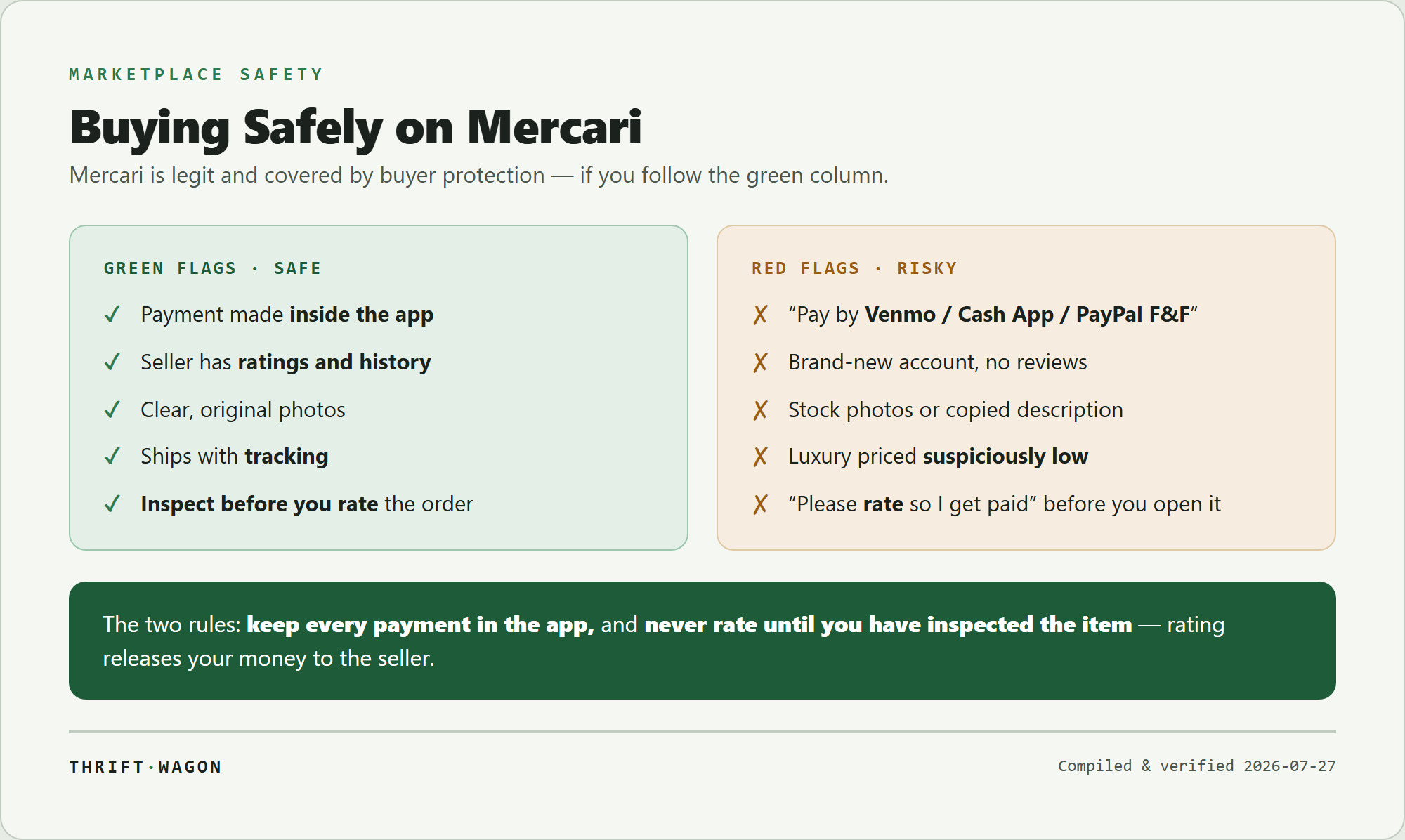
A seller (or buyer) asks to "finish the deal" over text, Instagram, or a payment app to "avoid fees." Off the platform there is no escrow and no protection. This is the single most common setup, and the correct response is always to decline and keep everything in the app.
Rate-before-you-open
Right after delivery, the seller pushes you to rate immediately. If you rate before opening, you release the money before you can catch a wrong or damaged item. Always inspect first.
The empty or swapped box (aimed at sellers)
A buyer receives a genuine item, then opens a not as described claim and returns an empty box, a different item, or a damaged one to get a refund and keep the original. Sellers protect themselves by photographing the item and packing process and by recording serial numbers.
Fake "item not received"
A buyer claims a delivered item never arrived. Tracking that shows delivery is the seller’s defense, which is why shipping with tracking (the default Mercari label) matters.
Too-good-to-be-true luxury
A brand-new account lists a designer bag or a hot electronics item far below market, using stock photos. It is bait. Real sellers have history, reviews, and their own photos.

How to spot a risky seller before you buy
You can screen out most bad transactions in under a minute by reading the seller, not just the item.
Green flags:
- An established profile with ratings and sales history.
- Original photos of the actual item, not stock images, ideally showing any flaws.
- A clear, specific description that discloses condition honestly.
- Responsive, normal communication inside the app.
Red flags:
- A brand-new account with no reviews listing high-value items.
- Stock photos or a description copied from a retail site.
- A price that is suspiciously low for the brand and condition.
- Any request to pay or talk off Mercari, or pressure to "buy now before someone else does."
When the seller checks out, buy with confidence. When several red flags stack up, move on — there is always another listing.
What to do if something goes wrong: returns and refunds
If an item arrives wrong, damaged, or not as described, the process is straightforward as long as you have not rated yet:
- Do not rate the order.
- Open the app, go to the order, and start a return request within three days of delivery, selecting the reason (not as described, damaged, wrong item, or counterfeit).
- Add evidence — clear photos of the problem and of the shipping label help Mercari decide quickly.
- Mercari reviews the claim. If it is valid, you are refunded, and you may be asked to return the item.
Because your payment is held until the order is rated or the window closes, a genuine problem reported inside the window is well protected. Problems reported after you rate, or on off-platform deals, are largely on you — which is the entire reason the "rate only after you check" rule exists.
Selling on Mercari safely
Sellers face the mirror image of buyer risk — mainly return fraud and chargebacks — and the same discipline protects you.
- Photograph everything. Take clear photos of the item, its condition, any serial numbers, and the packed box before you ship. This is your evidence if a buyer files a false not as described claim.
- Ship with tracking, every time. Use Mercari’s prepaid label so delivery is provable; it is your defense against fake item not received claims.
- Describe flaws honestly. Most "not as described" disputes come from vague listings, not fraud. Over-disclosing condition prevents them.
- Keep all communication in the app. If a buyer tries to move off-platform, decline — off Mercari you lose seller protection too.
Do those four things and the large majority of seller disputes never start. If you are new to listing, our guide to selling on Mercari walks through the full setup.

Keeping your account secure
Beyond individual transactions, protect the account itself:
- Enable two-factor authentication so a leaked password alone cannot get someone in.
- Ignore phishing. Mercari will not ask for your password or a verification code by text or email. Messages saying your account is "suspended, click here" are the classic account-takeover route.
- Never share verification codes. A scammer posing as a buyer may ask you to "confirm a code" — that code is the key to your account or a linked service, never theirs.
- Watch for overpayment tricks. Any story that involves you receiving money and sending some back is a scam, full stop.
Account security is the layer under transaction safety: even a perfect buyer or seller loses if the account is compromised.
Is Mercari safer than other resale apps?
Mercari’s safety model is very similar to its peers, and the differences are in the details rather than the fundamentals.
Like Poshmark (Posh Protect) and Depop (Depop Protection), Mercari holds the buyer’s payment and only releases it after delivery, and all three void protection the moment a deal moves off-platform. Where Mercari stands out is its flat, simple protection window and its whole-category breadth — it is not fashion-only, so it competes with eBay for electronics, collectibles, and general goods.
The practical takeaway is that no mainstream resale app is meaningfully "safer" than another at the platform level; they all protect on-platform payments and none protect off-platform ones. What varies is fees, audience, and how each handles disputes. Your safety depends far more on your own habits — staying in-app, inspecting before rating, shipping with tracking — than on which of these apps you choose.
So, should you use Mercari?
Yes. Mercari is a legitimate marketplace with real buyer and seller protection, and for secondhand clothing, electronics, and collectibles it is one of the easier places to buy and sell in the US. The scams that exist are well known and mostly avoidable.
The formula is simple. As a buyer: check the seller’s history, keep everything in the app, and never rate until you have opened and inspected the item. As a seller: photograph everything, ship with tracking, describe flaws honestly, and refuse to move off-platform. Do that, and Mercari’s protection does its job.
Treat the platform as what it is — a well-run marketplace full of ordinary people, plus a small number of scammers running predictable plays — and you can buy and sell on Mercari with confidence.
Frequently asked questions
Is Mercari legit and safe to buy from?
Yes. Mercari is an established, publicly traded marketplace, and every in-app purchase is covered by Mercari Protection, which holds your payment until the item is delivered and confirmed. Buying is safe as long as you keep payment and messaging in the app and inspect the item before you rate the order.
How does Mercari buyer protection work?
When you pay, Mercari holds the money instead of sending it to the seller. After delivery you have three days to inspect the item and either rate it or open a return request. If the item never arrives or is not as described, you open a request in that window and Mercari refunds a valid claim. Rating the order releases the funds.
What are Mercari’s fees in 2026?
Sellers pay a flat 10% selling fee on the item price plus buyer-paid shipping, with no separate payment processing fee. Buyers pay a 3.6% Buyer Protection fee at checkout. Standard ACH payouts are free (one per day); Instant Pay costs $3. This structure has been in place since January 2025.
What is the most common Mercari scam?
Being asked to complete the deal off the app — over text or a payment app like Venmo or Cash App, usually to "save fees." Off-platform, there is no escrow and no buyer or seller protection. Declining and keeping everything inside Mercari avoids the large majority of scams.
Should I rate an item as soon as it arrives?
No. Rating releases your payment to the seller and effectively closes the transaction. Always open the package and confirm the item matches the listing first. If there is a problem, open a return request instead of rating, while your payment is still protected.
Is Mercari safer than Poshmark or Depop?
They are broadly comparable. All three hold the buyer’s payment until delivery and void protection on off-platform deals. Mercari covers all categories rather than just fashion. Your safety depends more on staying in-app and inspecting before you confirm than on which platform you pick.
What sellers are reporting
Buyers and sellers on Mercari’s subreddit repeatedly warn each other that the biggest avoidable losses come from moving a deal off-app or from buyers rating before inspecting the item.
— members of the r/Mercari community, community post
Mixed reviews describe Mercari’s buyer protection resolving not-as-described and non-delivery cases with a refund, while complaints cluster around off-platform deals and disputes opened after the buyer already rated.
— reviewers on Trustpilot, review
What this guide does not cover
This guide covers buying and selling safely on Mercari in the United States; fees, protection terms, and rating windows can change and can differ in other countries, so confirm current details in Mercari’s help center before relying on them. It is general guidance, not legal or financial advice.
Sources
- Mercari sellers pay a flat 10% selling fee on item price plus buyer-paid shipping, buyers pay a 3.6% Buyer Protection fee, and there is no separate seller payment processing fee. — Mercari Help Center
- Standard ACH payouts on Mercari are free (one per day) and Instant Pay costs $3. — Mercari Help Center
- Marketplace fee comparison across eBay, Poshmark, Etsy, Mercari, and Depop. — Thrift Wagon