How to Sell on Mercari in 2026: A Beginner’s Guide
Verified 2026-07-27
Selling on Mercari is one of the simplest ways to turn clutter into cash: it is free to list, you photograph an item, set a price, and Mercari handles payment and provides a prepaid shipping label. The trade-off is a flat 10% selling fee, taken only when the item sells. This complete beginner’s guide walks through setting up, listing an item that actually sells, pricing it, shipping it, and exactly what Mercari’s 2026 fees are, so your first sale goes smoothly.

Key takeaways
- Listing on Mercari is free; the flat 10% selling fee only applies when an item sells, so there is no cost to start.
- Photos and an accurate, keyword-rich title do most of the selling, so spend your effort there.
- Price from what similar items actually sold for, not optimistic active listings, and use offers to close hesitant buyers.
- Ship promptly with a tracked Mercari label; fast, tracked shipping earns good ratings and protects you from false claims.
- You are paid after the buyer rates the order or the three-day window closes, so build a little patience into your cash-flow expectations.
Is selling on Mercari worth it?
For decluttering and casual reselling, yes. Mercari is beginner-friendly, free to list, and covers all categories — clothing, electronics, toys, home goods, collectibles, and more — so it is not limited to fashion the way some apps are. Listing is quick, and Mercari handles the payment, the prepaid label, and buyer protection for you.
The honest trade-off is the flat 10% selling fee and the pace: Mercari does not have the sheer search demand of eBay, so some items sell slower, and you are paid after the buyer rates the order rather than instantly.
Where Mercari shines is simplicity for everyday items. If you have a closet, garage, or drawer full of good-condition things you no longer use, Mercari is one of the lowest-friction places to sell them. For higher-value collectibles or niche items with deep buyer demand, eBay may reach more buyers — but for general secondhand goods, Mercari is genuinely worth it.
What you need before you start
Setting up takes minutes. Have ready:
- The Mercari app or website and a free account.
- A bank account to receive payouts.
- Something to sell in good, honestly-describable condition.
- Clear photos — Mercari lets you add multiple images, and good ones drive most of your sales.
- Basic shipping supplies — a mailer or box, tape, and ideally a scale so you can pick the right label.
That is the whole list. You do not need a store, a subscription, or any inventory beyond your first item. Because listing is free and the fee only applies on a sale, you can put up your first ten items without spending anything — which makes Mercari an easy, no-risk place to learn how reselling works.
Step 1: Set up your Mercari account
Download the Mercari app (or use the website) and create a free account with your email or a linked login. To sell, you will:
- Verify your identity and details as prompted.
- Link a bank account for payouts, so Mercari can deposit your proceeds after a sale.
- Set your profile — a real photo and a short bio build a little trust with buyers.
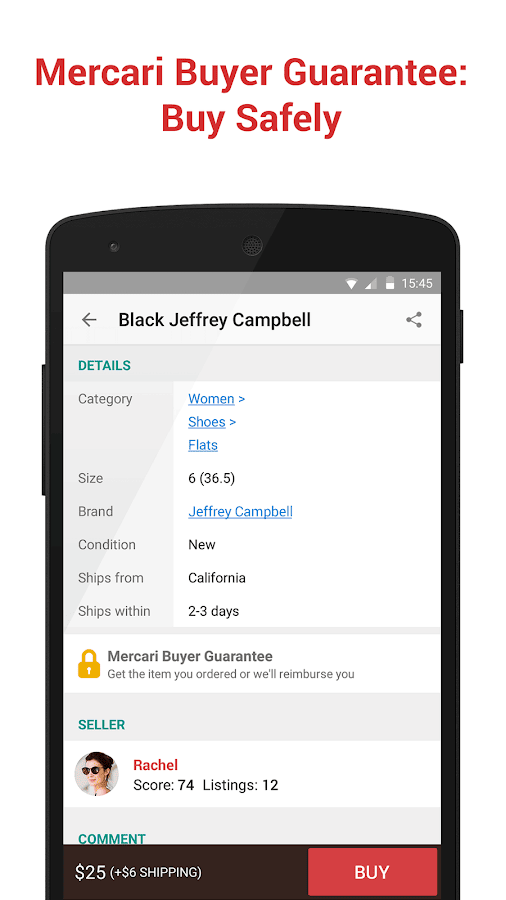
There is no fee to open a seller account and no subscription. Once you are set up, tap Sell to create your first listing. The whole flow is designed to be done from a phone in a few minutes, and you can list your first item immediately after setup.
Step 2: Decide what to sell
The easiest place to start is your own home: clothing and shoes you no longer wear, electronics and accessories, toys and games, kitchen and home goods, books, and collectibles. Mercari’s all-category reach means most good-condition items have a buyer.
Before you list something, do a quick demand and price check: search Mercari (and eBay’s sold listings) for the same item to see whether similar ones sell and for how much. Items that are easy to describe, easy to ship, and in clear demand sell fastest — brand-name clothing, popular electronics, and sought-after toys or collectibles are reliable beginner categories.
Avoid starting with heavy, fragile, or hard-to-ship items, and skip anything you can’t honestly describe as working and clean. Starting with straightforward, in-demand items builds momentum and good ratings that help everything you list afterward.

Step 3: Create a listing that sells
A Mercari listing lives or dies on its photos and title. For both:
- Photograph clearly and completely. Use a clean, well-lit background, fill the photo slots, and show the item from multiple angles plus any flaws. Clear photos are the single biggest driver of clicks and sales.
- Write a specific, keyword-rich title. Lead with brand, item, size, model, and color — the words a buyer would actually type. "Nike Air Max 90 Men’s Size 10 White Sneakers" beats "cool shoes."
- Fill in the details. Set the category, brand, size, and condition accurately; Mercari uses them to surface your item in search and filters.
- Describe honestly. State condition, measurements, what’s included, and any flaws. Over-disclosing prevents the not-as-described disputes that cost you ratings.
A complete, honest, well-photographed listing is what turns a browse into a sale.

Step 4: Price it, and use offers
Price from what similar items actually sold for, not from hopeful active listings. Search comparable sold items, find the realistic middle of the range, and price near it — a little lower if you want it gone fast, at the top only if yours is exceptional. Build in the flat 10% selling fee so your payout still works.
Mercari also gives you tools to close a sale:
- Offers to likers / smart pricing: when people ‘like’ your item without buying, you can send them an offer at a small discount, which often converts hesitation into a sale.
- Accepting and countering offers: buyers can send offers; a quick counter near your target price frequently closes the deal.
- Bundling: buyers who want multiple items can ask for a combined price, saving you on shipping and moving more inventory.
Active, reasonable pricing and prompt responses to offers sell items far faster than posting once and waiting.
Step 5: Set up shipping
Shipping on Mercari is simple, and getting it right protects both your payout and your ratings.
- Use a prepaid Mercari label. Choose the label option that fits the item’s weight and size; Mercari’s rates are discounted, and the label includes tracking, which is your defense against false ‘item not received’ claims. You can have the buyer pay shipping or offer free shipping (with the cost built into your price).
- Weigh and measure first so you pick the right label and don’t lose money on an underestimated package.
- Pack carefully — protect fragile items, and photograph the packed item if it is valuable, in case of a dispute.
- Ship promptly, within Mercari’s expected handling time. Fast shipping is one of the biggest drivers of good ratings.
Once the item is delivered and the buyer rates it (or the three-day window closes), your proceeds are released.

Understand Mercari’s fees before you price
Mercari’s fees changed at the start of 2025, so price with the current structure in mind:
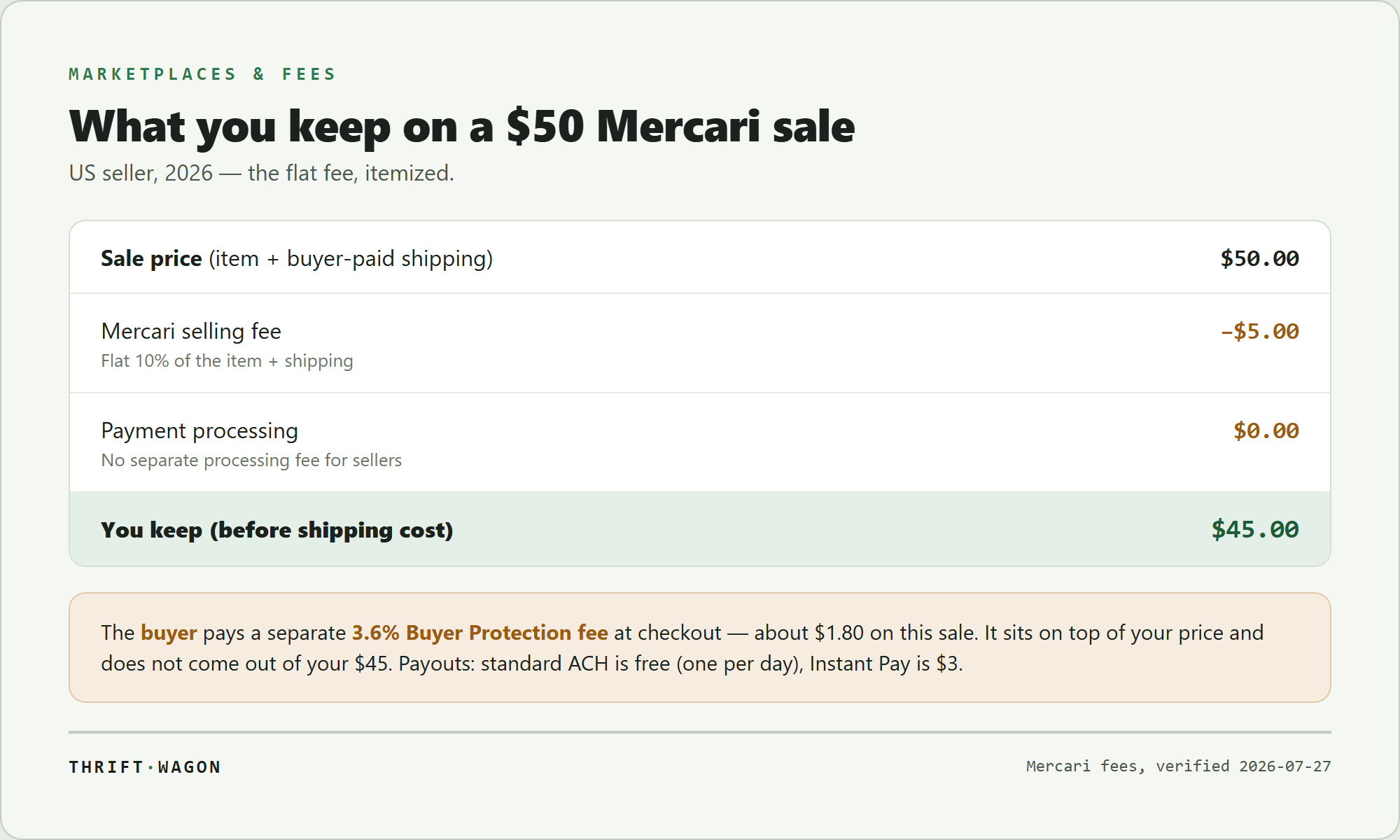
- Sellers pay a flat 10% selling fee on the item price plus buyer-paid shipping. There is no separate payment processing fee for sellers.
- Buyers pay a 3.6% Buyer Protection fee at checkout, on top of your price — it does not come out of your payout.
- Payouts: standard ACH direct deposit is free (one per day); Instant Pay costs $3.
So on a $50 item, you pay about $5 in selling fees and keep roughly $45 before your shipping cost. Build that 10% into your price so the payout matches your expectations. For how Mercari’s fees compare with eBay, Poshmark, Etsy, and Depop, see our marketplace fee comparison, and for the full safety picture, see our guide on whether Mercari is legit.
How to get your first sale and good ratings
Your first few sales are about building trust and momentum:
- Price competitively at first. Being slightly under the recent sold range gets early sales and ratings that make later listings easier.
- Respond fast. Quick replies to questions and offers convert far more browsers into buyers.
- Nail the fundamentals every time — accurate description, careful packing, tracked shipping — so early ratings are strong.
- Ship the same or next day when you can. Speed is the easiest way to earn five-star ratings.
Good ratings compound: a clean early track record makes buyers comfortable and helps your listings surface. The first sale is the hardest; after a handful of smooth transactions, selling on Mercari gets noticeably easier.

Common beginner mistakes to avoid
A few errors slow down most new Mercari sellers:
- Weak photos. Dark, cluttered, or too-few images are the biggest conversion killer. Shoot clearly, in good light, using the slots.
- Vague titles. Missing brand, size, or model keywords leaves you invisible in search.
- Pricing from active listings. Only sold prices show what buyers actually pay; pricing from optimistic active listings leaves items sitting.
- Slow shipping. Late shipping is the fastest way to earn a poor rating. Ship promptly, with tracking.
- Ignoring the 10% fee. Not building the selling fee into your price means a smaller payout than you planned.
- Going off-platform. Any request to complete a deal off Mercari voids your seller protection — always keep it in the app.
Avoid those, treat it like the small business it is, and a beginner can build steady sales on Mercari: real demand, honest listings, data-based pricing, fast tracked shipping, and friendly service.
Frequently asked questions
Is it free to sell on Mercari?
Yes, listing is free. Mercari charges a flat 10% selling fee only when your item sells, on the item price plus buyer-paid shipping, with no separate payment processing fee for sellers. So you can list items at no cost and only pay when you make a sale.
How does selling on Mercari work?
You photograph and list an item, a buyer pays through the app, and you ship it — usually with a prepaid Mercari label that includes tracking. Mercari holds the payment until the item is delivered and the buyer rates it (or the three-day window closes), then releases your proceeds minus the 10% fee.
How much does Mercari take from a sale?
Sellers pay a flat 10% selling fee on the item price plus buyer-paid shipping, and there is no separate processing fee. Buyers pay a 3.6% buyer protection fee on top of the price. So on a $50 item you pay about $5 and keep roughly $45 before your shipping cost.
What sells best on Mercari?
Everyday secondhand goods in clear demand: brand-name clothing and shoes, popular electronics and accessories, toys and games, collectibles, and home goods. Items that are easy to describe, easy to ship, and that similar listings sell for a worthwhile price tend to move fastest. Check sold prices before listing.
How do I get my first sale on Mercari?
Price slightly under the recent sold range, use clear photos and a keyword-rich title, respond quickly to questions and offers, and ship promptly with tracking. Sending offers to people who like your item often converts them. Strong early ratings then make every later listing easier to sell.
When do I get paid on Mercari?
After the item is delivered and the buyer rates the order, or after the three-day rating window closes automatically, your proceeds are released to your Mercari balance. You can then withdraw by standard ACH direct deposit (free, one per day) or Instant Pay for $3.
What sellers are reporting
New Mercari sellers on community forums consistently credit clear photos, keyword-rich titles, competitive pricing from sold comps, and fast shipping as the factors that got their first sales and strong ratings.
— members of the r/Mercari community, community post
Sellers frequently report that sending offers to users who liked an item, and responding quickly to buyer offers, converts far more browsers into buyers than listing once and waiting.
— members of the r/Flipping community, community post
What this guide does not cover
This is a general getting-started guide for selling on Mercari in the US, not legal, tax, or financial advice. Fees, shipping options, and payout terms change over time, so confirm current details in Mercari’s help center before relying on them. Whether your selling counts as a business for tax purposes depends on your situation.
Sources
- Mercari sellers pay a flat 10% selling fee on item price plus buyer-paid shipping with no separate processing fee, and buyers pay a 3.6% buyer protection fee; ACH payouts are free (one per day) and Instant Pay is $3. — Mercari Help Center
- Marketplace fee comparison across eBay, Poshmark, Etsy, Mercari, and Depop. — Thrift Wagon